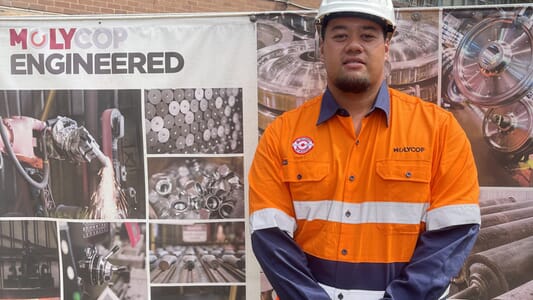
Molycop will present new research at Procemin–Geomet 2026 demonstrating how the Ball Mill Abrasion Test (BMAT) can improve grinding media selection through realistic performance testing.
Key Facts
- Molycop will present BMAT research at Procemin–Geomet 2026 in Chile.
- The study evaluates three HiCr grinding media products under realistic mill conditions.
- Results show how BMAT supports more accurate grinding media selection and optimisation.
Taking place in Santiago, Chile, from 7–9 July 2026, the event brings together mining professionals, metallurgists, geologists, process engineers, researchers and technology providers from around the world to explore practical solutions for the industry's most pressing challenges. Key themes include comminution, flotation, geometallurgical modelling, digital transformation, automation, sustainability and ESG performance.
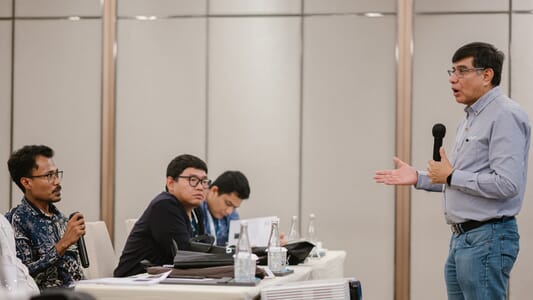
Representing Molycop at this year's conference will be Dr Hamid Pourasiabi, Principal Tribology/Metallurgy Engineer – Innovation, and Carlos Garcia, Metallurgical Lab Engineer, who will present their research on the application of the Ball Mill Abrasion Test (BMAT) in grinding media selection.

Advancing Grinding Media Evaluation
Their presentation, titled "Application of the Ball Mill Abrasion Test (BMAT) in Grinding Media Selection — HiCr Cast Balls," examines how the BMAT can be used to assess grinding media performance under conditions that closely replicate industrial milling environments.Selecting the right grinding media remains one of the most important decisions in comminution circuits. However, predicting grinding media performance is a complex challenge. Wear rates are influenced by numerous interacting variables, including ore characteristics, particle size, slurry chemistry, operating conditions and product metallurgy. As a result, a grinding media product that performs exceptionally well in one operation may deliver very different outcomes in another.
Traditional laboratory wear tests, such as rubber wheel abrasion and pin abrasion testing, have long been used as screening tools. While valuable in certain applications, these methods can struggle to accurately represent the complex conditions experienced inside industrial grinding mills.
This is where the BMAT offers a significant advantage.
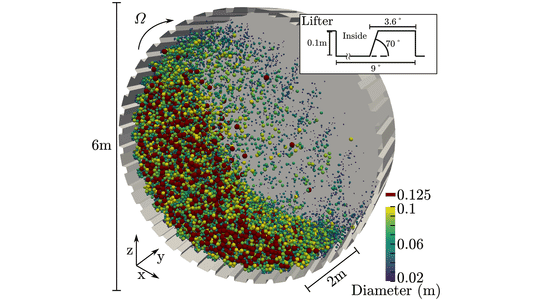
Designed specifically to simulate the environment inside a ball mill, the BMAT enables researchers to evaluate grinding media under conditions that more closely reflect real-world operating scenarios. Its flexibility allows testing across different ore types, particle sizes and wear environments, creating valuable insights into actual product performance.

Putting HiCr Grinding Media to the Test
In their study, Hamid and Carlos evaluated three high chrome cast iron (HiCr) grinding media products using BMAT testing.The products were assessed across multiple testing conditions, including ores with different abrasive characteristics and varying particle sizes. The objective was to determine which product delivered the strongest overall performance and to understand the wear mechanisms responsible for the observed results.
The testing demonstrated clear differences between the three grades. One product consistently outperformed the others across all test conditions, while another showed significantly higher wear rates.
Further investigation revealed that fracture-related damage mechanisms played a major role in the poorer-performing product. Using Scanning Electron Microscope (SEM) analysis, the researchers identified casting defects that likely contributed to crack initiation and propagation, ultimately accelerating wear and material loss.
By combining quantitative wear measurements with detailed metallurgical analysis, the team was able to develop a comprehensive understanding of product performance and provide a clear recommendation for the intended application.
Supporting Data-Driven Decision Making
The research highlights the growing importance of realistic performance testing in supporting grinding media selection and optimisation.By reproducing both abrasive wear and fracture-related damage mechanisms observed in industrial environments, the BMAT provides a powerful tool for evaluating products before they reach the field. This approach helps customers make more informed decisions while providing manufacturers with valuable insights to support product development and continuous improvement.
The work also reflects Molycop's broader commitment to combining metallurgical expertise, advanced testing capabilities and data-driven analysis to deliver practical solutions for mining operations worldwide.

Sharing Innovation on a Global Stage
As a global leader in grinding media and mining solutions, Molycop continues to invest in research and innovation that help customers improve comminution efficiency, optimise circuit performance and enhance operational sustainability.Participation in Procemin–Geomet 2026 provides an opportunity to share these advancements with the global mining community while contributing to important discussions around the future of mineral processing and geometallurgy.
Attendees are encouraged to connect with the Molycop team during the conference to learn more about the company's integrated approach to grinding media optimisation, mill performance analysis, process improvement and data-driven decision-making.
Through research such as the BMAT study, Molycop continues to demonstrate how innovation, technical expertise and collaboration can help mining operations unlock greater performance and value across the full orebody lifecycle.
Procemin–Geomet 2026
Date: 7–9 July 2026Location: Santiago, Chile
Language: Spanish
Presenters:
- Dr Hamid Pourasiabi, Principal Tribology/Metallurgy Engineer – Innovation
- Carlos Garcia, Metallurgical Lab Engineer