Molycop’s OreVia suite transforms mineral processing with AI-powered clarity — delivering live, data-driven insight across every stage of mineral processing operations.
Key Facts
- OreVia’s computer vision and machine learning provide real-time visibility into rock, slurry and froth — turning raw data into instant, actionable intelligence.
- By detecting variability before it impacts performance, OreVia helps operations improve recovery, throughput and efficiency, while cutting energy and reagent use.
- Designed as a flexible, modular system, OreVia adapts to each site’s needs and grows alongside new technologies, ensuring long-term performance and value.
At its core, OreVia is about clarity. By capturing and interpreting ore behaviour across every stage of the processing circuit, it gives operators insights and foresight that traditional tools can’t match. The result? A clearer picture of what’s happening in real time – and the power to act before small variations become costly inefficiencies.
Bringing intelligence to the process
Unlike conventional systems that rely on static measurements or delayed lab results, OreVia applies computer vision and machine learning to deliver live, evolving data that improves over time – much like an experienced operator refining their intuition with every shift.High-resolution imaging across key circuit points – from crusher discharge to flotation tanks – allows OreVia to contextualise what’s really happening inside the plant. When conditions shift, the system alerts operators early, supporting faster, data-driven decisions that protect recovery and throughput.
Seamless integration with the Molycop VIP Platform and plant control systems ensures that these insights flow naturally into daily operations. Whether used locally or connected via the cloud for enterprise-level analysis, OreVia adapts to the needs of every site.
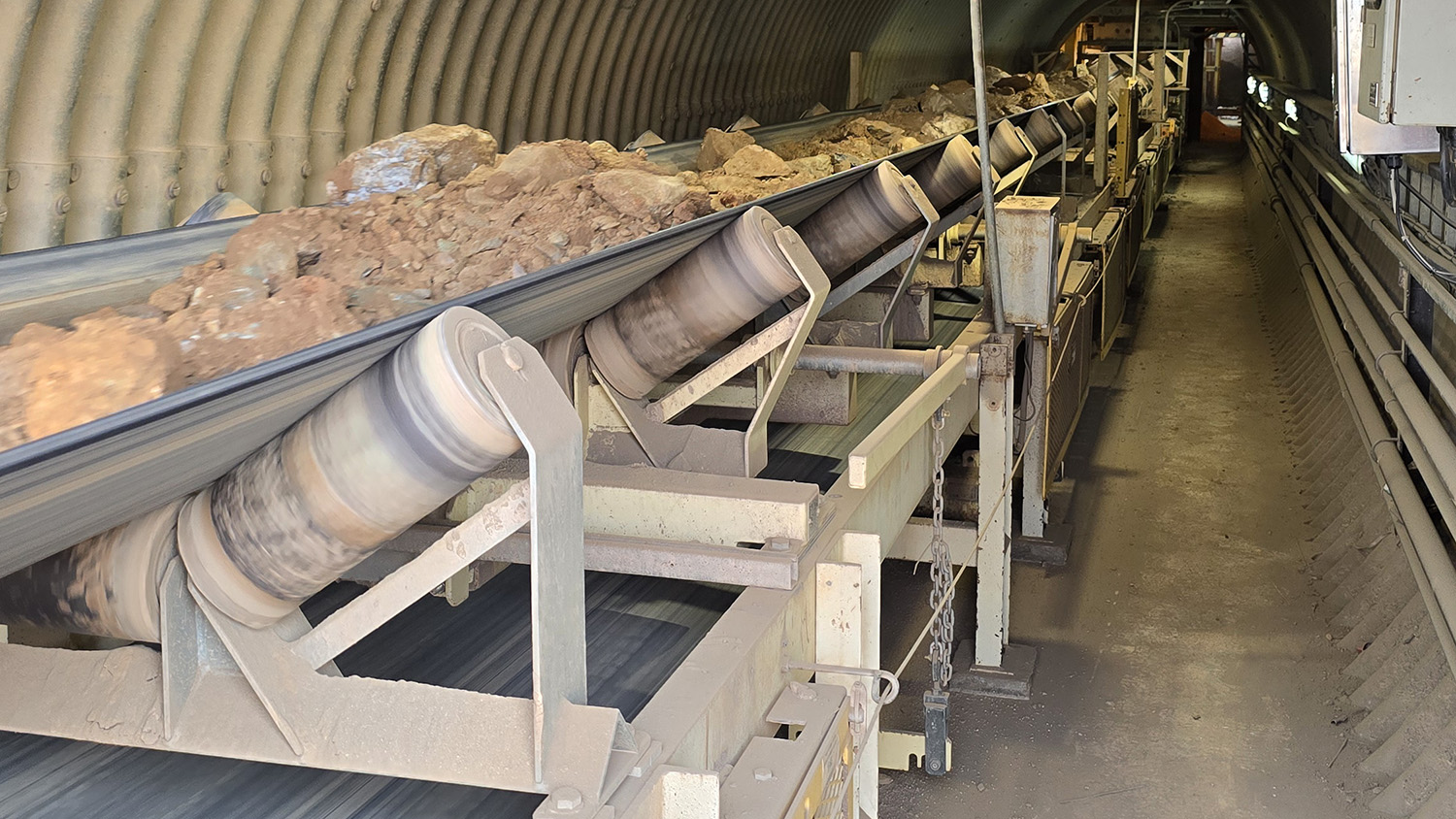 OreVia Rock uses AI-powered coarse ore detection to monitor particle size in real time.
Why OreVia matters
Ask anyone in the industry – process variability remains one of the toughest challenges in mineral processing. OreVia directly tackles this issue by transforming how variability is detected and managed. By reducing fluctuations and improving process control, it helps operations achieve what every plant strives for: stable performance, consistent quality and measurable gains in profitability.The outcomes speak for themselves – lower reagent and energy consumption, improved throughput and recovery, and stronger margins driven by reliable, data-based decision-making.
Adaptable to every operation
OreVia isn’t a single device – it’s a flexible, modular system designed to grow with each plant’s unique challenges. Its algorithms evolve alongside new applications, ensuring long-term adaptability as both technology and operations advance.The suite spans three core dimensions, each addressing a critical stage of the process:
• OreVia Rock – AI-powered coarse ore detection that stabilises mill feed, reduces liner wear and enhances circuit performance.
• OreVia Slurry – Real-time particle size and shape analysis that empowers better grinding control and improved recovery.
• OreVia Froth – Continuous froth monitoring that enables real-time flotation optimisation and consistent extraction efficiency.
Inside OreVia: Expert insights into the future of process characterisation
As mining operations strive for smarter, more efficient processing, Molycop’s OreVia suite redefines what’s possible in process characterisation. To explore how this technology is changing the way operators understand and control their circuits, we spoke with two of Molycop’s leading specialists – Edgar King, Manager (Machine Vision), and Damian Thorpe, Manager (Advanced Milling Instrumentation) – who have been instrumental in its rollout and integration across global operations.
Transforming ore monitoring with OreVia Rock
For decades, coarse ore monitoring has been one of the toughest challenges in mineral processing. Traditional systems rely on manual sampling or fixed sensors that struggle to adapt to changing conditions. OreVia Rock breaks this pattern.According to Edgar:
OreVia Rock represents a significant leap forward in coarse ore detection. Unlike conventional systems, it uses AI-driven machine vision to continuously monitor particle sizes in real time across the crushing and milling circuit. The system automatically adapts to variations in ore type and installation conditions without the need for recalibration.
By delivering fast, high-resolution particle size data, OreVia Rock transforms particle measurement from a reactive task into a proactive control tool. “Operators no longer need to wait for lab results or estimations,” Edgar explains. “They can stabilise throughput, optimise mill feed and reduce operational variability as it happens.”
The system integrates seamlessly with both control platforms and the Molycop VIP ecosystem, enabling real-time alerts and remote monitoring, both key enablers for data-driven decision-making and consistent mill performance.
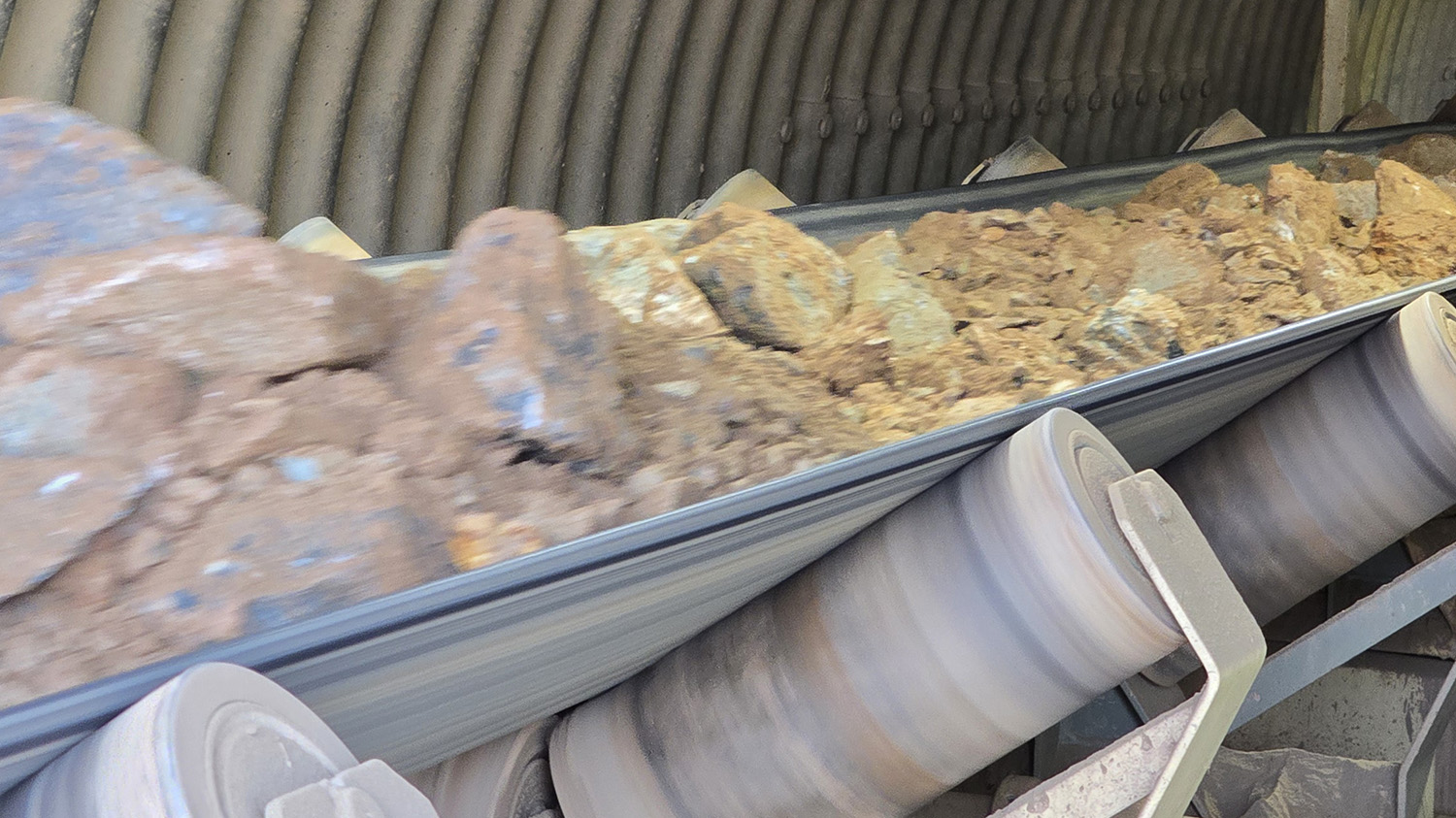
With OreVia Rock, operators can stabilise throughput, optimise mill feed and reduce operational variability without the need for recalibration.
Seeing beyond the surface: Froth optimisation with OreVia Froth
Flotation control has long been one of the most complex aspects of mineral processing, largely due to the dynamic nature of froth behaviour.“Froth monitoring has always been one of the hardest challenges,” says Edgar. “It’s a multi-phase system that changes constantly with ore type and process conditions. What excites me about OreVia Froth is how it turns that complexity into clarity.”
Using a combination of AI-powered bubble sizing, pulp velocity measurement and anomaly detection, OreVia Froth gives operators real-time visibility into what’s happening above the flotation tank. “This technology allows plants to stabilise mass flow between cells, optimise air addition and react immediately to anomalies,” Edgar explains. “The result is better flotation recovery, improved consistency and greater control across the board.”
Fully compatible with FloatStar and other control platforms, OreVia Froth not only detects changes but helps operators act on them – turning visual data into operational intelligence.
Closing the loop with OreVia Slurry
While rock and froth have traditionally received more attention, slurry characterisation has long remained a ‘blind spot’ for many plants. As Damian Thorpe notes, “OreVia Slurry changes that completely. It gives operators the ability to see inside the process, not just infer what’s happening.” OreVia Slurry technology consists of a high-resolution endoscope installed directly into the slurry pipe.
Powered by advanced imaging technology, OreVia Slurry captures live, microscopic images of particles directly from the process stream, offering unprecedented visibility and precision.
Damian says:
It’s calibrated with ISO-standardised particles and achieves ±2% accuracy on key metrics like Xv10, Xv50, and Xv90. That’s a level of traceability and consistency that traditional methods like sieving or laser diffraction can’t provide.
The system’s ability to detect early signs of over-milling, cyclone inefficiencies or flotation instability gives plant teams a decisive edge. “Operators are no longer working in the dark,” Damian explains. “They can make dynamic adjustments, reduce downtime and continuously optimise without expensive interruptions.”
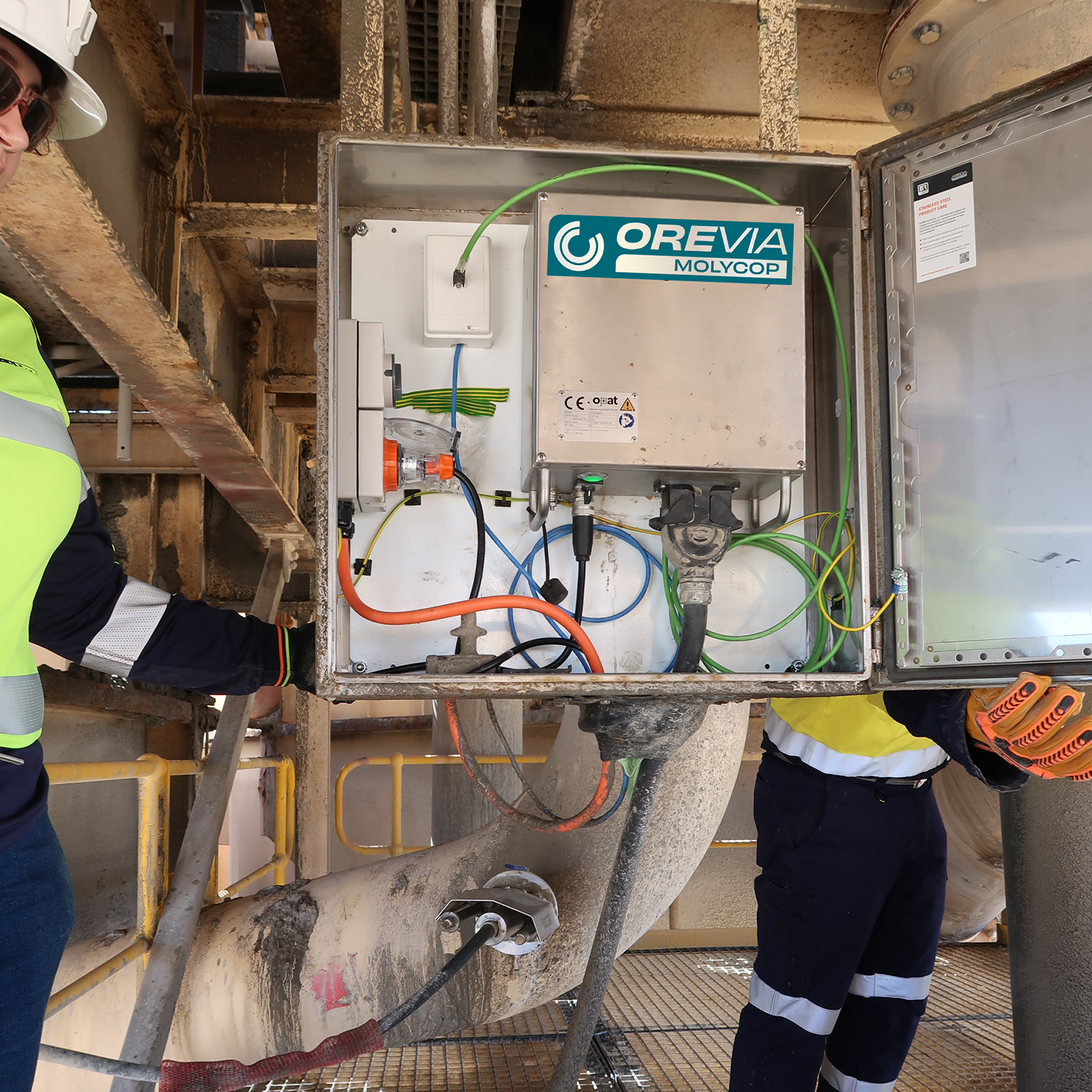 OreVia Slurry uses real-time particle size and shape analysis to improve recovery.
Towards smarter, predictive operations
Looking ahead, both experts agree that the integration of OreVia technologies will be transformative for the industry. “For OreVia Rock, the biggest impact is in stabilising mill feed and improving throughput,” Edgar says. “For Froth, it’s in making flotation control more predictable and efficient. Together, they shift operations from reactive troubleshooting to predictive optimisation.”Thorpe sees a similar evolution on the slurry side. “As plants adopt smarter control systems, slurry characterisation will become a cornerstone of autonomous, predictive operations. Inline data from OreVia will feed directly into closed-loop systems for mills, cyclones and flotation cells,” he says. “With AI and neural networks detecting subtle anomalies in real time, particle data will move from a background measurement to a key performance indicator.”
A connection vision for the future
Ultimately, OreVia unites all three process dimensions – rock, slurry, and froth – into one intelligent, adaptive ecosystem. As Edgar puts it, “OreVia gives operators the eyes they’ve never had before. It’s not just data – it’s actionable insight that changes outcomes.”Damian adds, “We’re connecting every stage of the ore journey in a way that delivers measurable results. It’s process characterisation made smarter.”
With OreVia, Molycop is charting a new path for mineral processing – one where visibility, intelligence and optimisation converge to create a truly connected operation.