Utilisation de l'intelligence artificielle pour classer les conditions de la mousse de flottation

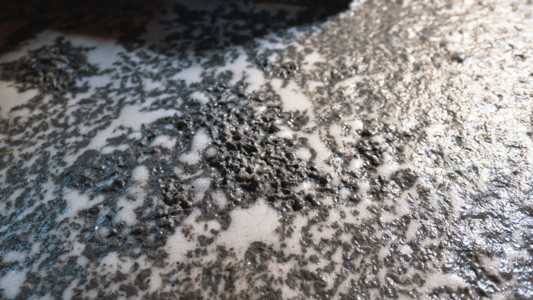
Cet article montre comment les réseaux neuronaux convolutionnels (CNN) ont le potentiel de classer les conditions anormales de l'écume et de maintenir l'efficacité du processus de flottation.

  • Utilising advanced camera systems to measure the velocity of froth in flotation cells can be useful in stabilisation of mass-pull rates between cells.
  • This paper details the training and implementation of CNNs to identify ‘boiling’ conditions.
  • Results from using CNNs demonstrates their potential to classify abnormal froth conditions and be integrated into multi-variable advanced control of complex systems.
Flotation plays an important role in mineral processing to selectively recover desired minerals and concentrate them to a desired grade. Disturbances from upstream processes such as milling, and variability in the feed material due to a variety of ore-types being processed, could have a detrimental effect on the efficiency of the flotation process if not compensated for. 

Many flotation processes are not well instrumented, with unmeasured disturbances including water addition rates and the addition of certain reagents adding to the complexity. These measured- and unmeasured disturbances, combined with the lack of a real-time measurement of grade- and recovery from each flotation cell, provides for a challenging control environment.

Advances in disturbance mitigation can be of great benefit. Utilising advanced camera systems to measure the velocity of froth in flotation cells can be useful in stabilisation of mass-pull rates between cells. 

This paper details the training and implementation of convolutional neural network (CNN) architectures. These conditions are disruptive disturbances to flotation camera vector calculations that need to be detected and corrected to maintain stable control. 

The CNN models developed in this paper were trained on 21,184 images of boiling and non-boiling flotation cell conditions taken from an operating camera control system and achieved an f1 accuracy of 94% on 5296 unseen test images. 

The methodology of how this system could be integrated with an existing control environment is discussed along with the benefits to stability that it can provide by identifying these conditions. The shortcomings of the system on real-time data and the improvements that could be made to ensure a robust and deployable system as a final solution are also discussed.
Ressources Connexes

Applications de la flottation

Applications de la flottation

Molycop propose une large gamme de produits chimiques pour l'industrie minière, conçus pour optimiser la performance et l'efficacité des processus de récupération des minéraux.

Read More
Flottation

Flottation

Révolutionnez le circuit de flottation avec une solution intégrée Molycop utilisant des produits chimiques haute performance, des instruments intelligents, l'IA visuelle de pointe, les technologies de contrôle intelligent des processus et une expertise basée sur les données.

Read More
Agents moussants

Agents moussants

Les agents moussants stabilisent les bulles d'air afin qu'elles restent bien dispersées dans la boue et forment une couche de mousse stable qui peut être éliminée avant que les bulles n'éclatent.

Read More
Products and Services

Products and Services

Molycop is a global leader in mining consumables, instrumentation, process control and analytics and provides extensive complementary services to optimise efficiency and productivity in mineral processing operations. Our extensive product range, expert services and world-class innovative solutions ensure our customers in the mining and rail industries stay ahead of the curve.

Read More
Mine d'or Fosterville : déploiement réussi de la technologie d'optimisation du broyage

Mine d'or Fosterville : déploiement réussi de la technologie d'optimisation du broyage

Agnico Eagle Fosterville Gold Mine (Fosterville) exploite une usine d'or en Australie comprenant un circuit de concassage et de broyage (broyeur SAG avec circuit de classification cyclonique en boucle fermée) suivi de circuits de flottation, d'oxydation bactérienne et de lixiviation. Le manque de capacité de surtension entre le circuit de broyage et de flottation et les restrictions sur les opérations de concassage dues aux contraintes sonores ont entraîné un ensemble de défis uniques, qui ont nécessité la mise en œuvre d'une nouvelle solution de contrôle utilisant une instrumentation avancée.

Read More
Innovation

Innovation

Chez Molycop, nous considérons l'innovation comme un moyen de trouver des solutions à certains des plus grands défis de l'industrie minière. Nous visons à nous améliorer aujourd’hui afin de pouvoir offrir mieux demain.

Read More

Cookie Settings

We use cookies, including third party cookies, for operational purposes, statistical analyses, to personalize your experience, provide you with targeted content tailored to your interests and to analyze the performance of our advertising campaigns.

To find out more about the types of cookies, as well as who sends them on our website, please visit our dedicated guide to managing cookies.