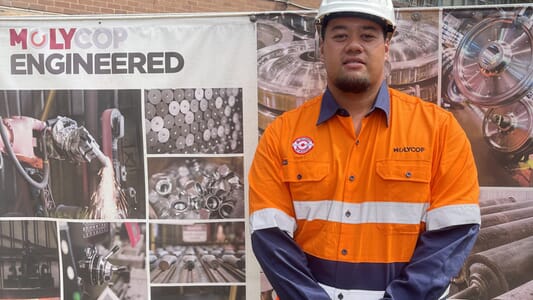
We spoke with Dr Yufan Mu, Molycop R&D Mineral Processing Engineer, about key insights from Flotation ’25 and how they intersect with Molycop’s innovation roadmap.
Key Facts
- Grinding–flotation chemistry is becoming increasingly important, underscoring grinding media design as a key performance lever for improving milling efficiency and flotation outcomes.
- The mineral processing sector is shifting from empirical reagent trials toward root-cause analysis, predictive modelling and data-driven optimisation.
- The industry is moving toward ore-specific performance optimisation strategies, an approach that aligns with Molycop’s tailored solutions for its customers.
We asked Dr Yufan Mu, Molycop R&D Mineral Processing Engineer, to share her reflections on the standout research presented at the conference and how industry trends align with Molycop’s innovation roadmap.
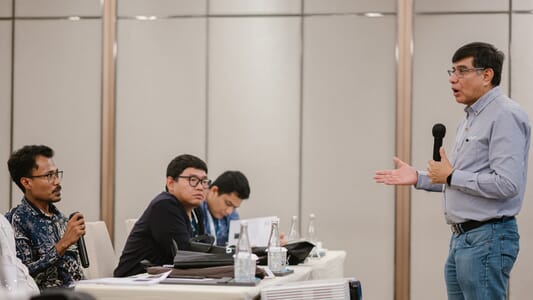
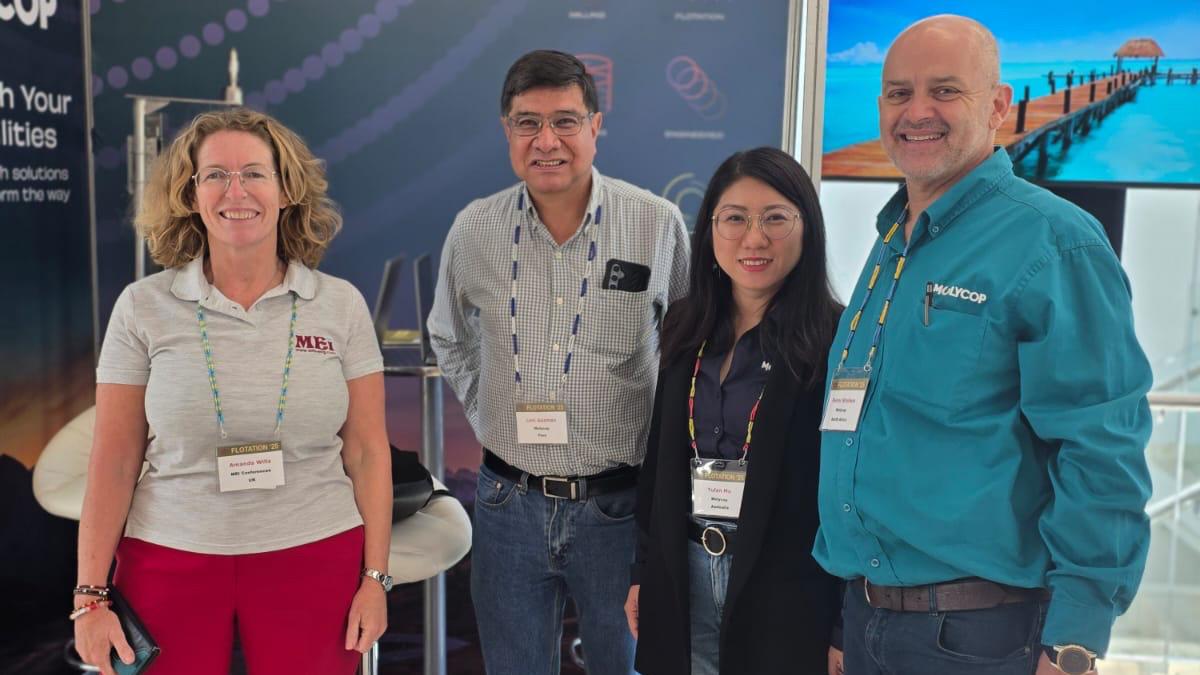 Dr Yufan Mu (second from right) at the conference, alongside an MEI representative, and Molycop team members Dr Levi Guzman and Peter Strobos.
Key technical themes from Flotation ’25
1. The rise of grinding–flotation chemistry
Several developments at Flotation ’25 stood out. First, there was a strong emphasis on grinding–flotation chemistry, underscoring grinding media design as a key performance lever for improving both milling efficiency and downstream flotation outcomes.
The industry continues to recognise that grinding media selection isn’t just about comminution efficiency – it’s about shaping pulp chemistry and flotation selectivity. This reinforces Molycop’s ongoing work to integrate media design with downstream metallurgical performance.
2. AI-enabled modelling and data-driven optimisation
The rise of AI-enabled modelling, soft sensors and advanced digital monitoring highlighted a clear industry shift away from empirical reagent trials toward root-cause analysis, predictive modelling and data-driven optimisation.
This aligns strongly with Molycop’s digital and analytical approach and its broader optimisation services, where integrated datasets and advanced modelling tools are used to diagnose constraints and drive targeted improvements.
3. Mineralogy-led flowsheet and reagent optimisation
Several papers demonstrated the increasing use of mineralogy, liberation and texture data to customise flowsheets, reagent schemes and operating conditions, showing how mineralogical integration is becoming essential for ore-specific performance optimisation.
The industry is increasingly moving toward ore-specific metallurgical strategies, an approach fully aligned with Molycop’s commitment to delivering tailored solutions across grinding media design, digital optimisation and smart chemistry.
 Molycop’s R&D direction
According to Dr Mu, the insights taken from Flotation ’25 directly support Molycop’s long-term innovation strategy:“The growing emphasis on grinding–flotation integration aligns with our efforts to position grinding media design as a strategic lever for enhancing circuit efficiency and metallurgical performance,” she explains. “The rise of AI, modelling and data-driven approaches mirrors our use of advanced data analysis of integrated operational datasets to uncover root causes and implement targeted engineering solutions.
“In parallel, the development of novel, green reagents tailored to specific mineralogy aligns with our goal of delivering ore-appropriate, environmentally responsible chemistry that complements media performance within a holistic circuit optimisation framework.”
A strong presence and a strong future
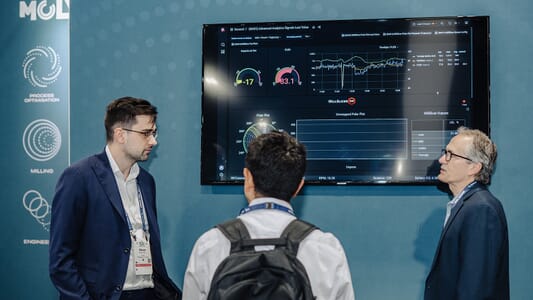
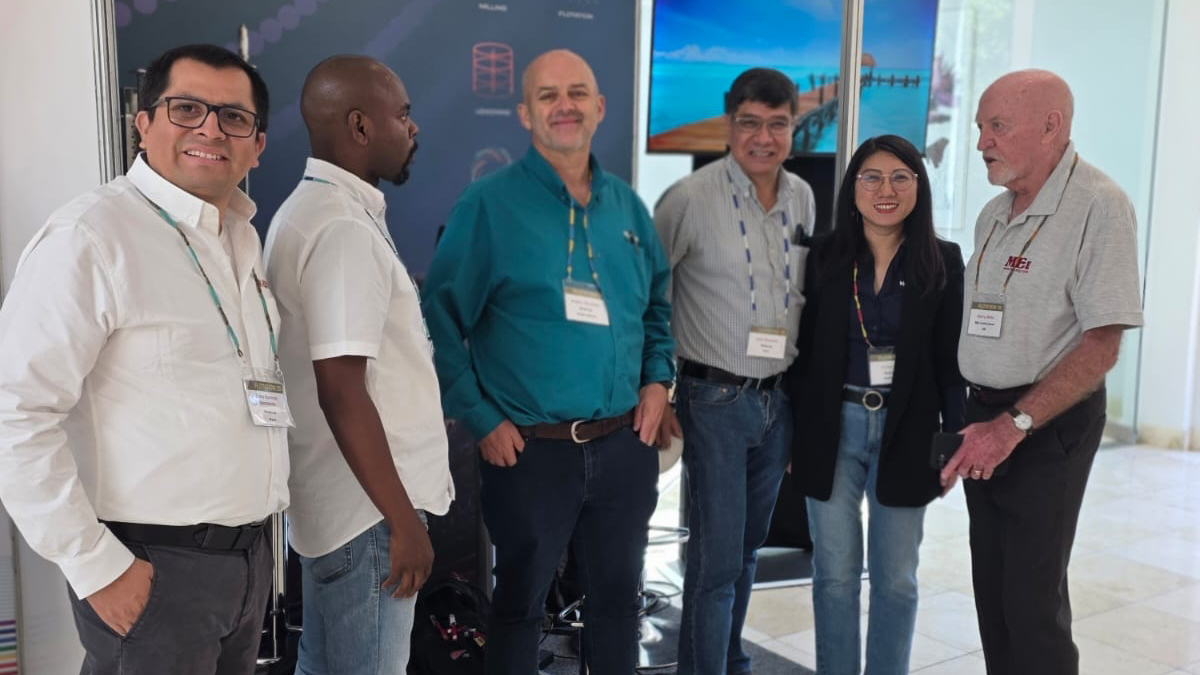
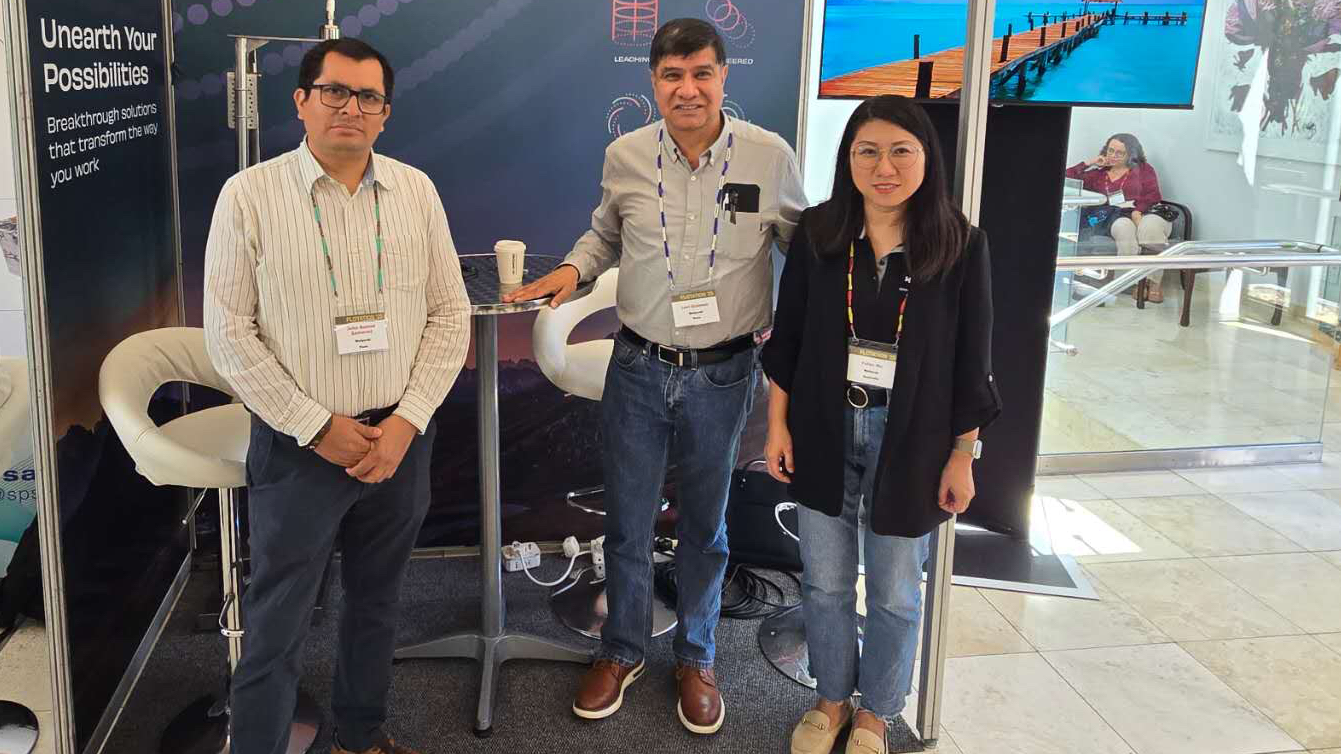
Flotation ’25 provided an invaluable opportunity for Molycop to engage with customers, share recent advancements and continue strengthening relationships across the global minerals processing community.Molycop was represented at the conference by several team members at a dedicated stand who met with clients, shared recent developments and engaged in technical conversations focused on real-world flotation challenges. Among the team members who joined Dr Yufan Mu were Levi Guzman (Technical Director, Application Services), Pieter Strobos (Vice President, Commercial) and Gundo Victor Makhado (Senior APC Engineer).
 Molycop – Progress Together