Ahead of her MetPlant 2026 presentation, Dr Yufan Mu discusses why grate pegging continues to constrain SAG mill performance — and how predictive, data-driven tools are reshaping the way operators manage discharge stability.
Key Facts
- Learn how data-driven analysis and machine learning are being used to identify the upstream ore and operating conditions that lead to grate pegging in SAG mills.
- Gain practical insight into the modified Grate Pegging Index (mGPI) and how it helps operators detect pegging risk earlier and move from reactive to proactive control.
- Explore real-world findings from full-scale SAG mill data that show how aligning ore characteristics, charge condition and operating strategy can improve throughput, stability and mill performance.
An interview with Dr Yufan Mu ahead of MetPlant 2026
Grate pegging remains one of the more persistent and disruptive challenges in SAG mill operation—often emerging without warning and forcing operators into reactive mode. Ahead of her upcoming presentation at MetPlant 2026, we sat down with Dr Yufan Mu from Molycop to discuss why grate pegging continues to constrain throughput, how data and machine learning can help predict it, and what practical insights operators can apply to improve mill stability.Dr Mu will present "Identifying critical ore characteristics and operational conditions leading to grate pegging in SAG mills," co-authored with Paul Shelley, as part of the MetPlant 2026 technical program.
Grate pegging is a familiar issue for many operators, yet it’s still often managed reactively. Why is it so difficult to get ahead of?
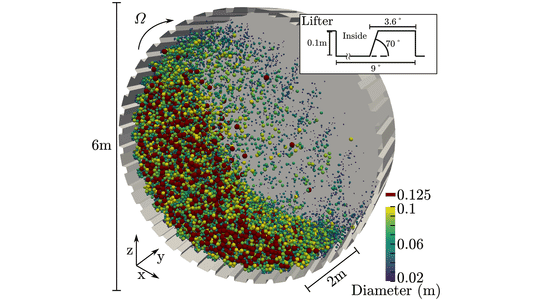
Grate pegging is deceptively complex. While it presents as a physical blockage at the grate, the drivers sit upstream—in the ore characteristics, the charge condition, and the operating strategy. What makes it particularly challenging is that pegging doesn’t usually arise from a single variable. It’s the interaction between feed size distribution, competency, mill load, and discharge conditions that creates the problem. Historically, we’ve lacked tools that systematically connect those factors, so interventions tend to occur after throughput has already been lost.Your paper looks at grate pegging through a data-driven lens. What approach did you take?
We analysed operational data from a full-scale industrial SAG mill across multiple liner campaigns. Rather than focusing on isolated events, we looked for recurrent operating patterns using machine learning techniques. This allowed us to identify combinations of ore characteristics and operating states that consistently preceded pegging events. The goal was to move from symptom-based diagnosis to a more predictive understanding of mill behaviour.One of the key outcomes of the work is the modified Grate Pegging Index. How does this help operators?
The modified Grate Pegging Index—or mGPI—integrates critical operating variables and feed characteristics into a single performance indicator. Instead of relying on indirect signs like power instability or discharge density swings, the index provides a clearer indication of pegging risk in near real time. Practically, this means operators and metallurgists can interpret mill state earlier and intervene before the situation escalates into severe instability or lost production.
From your findings, what are the biggest levers sites can pull to reduce pegging risk?
Alignment is the key theme. Ore characteristics, charge condition, and operating strategy need to be considered together. For example, certain ore types may require tighter control of charge volume or grate open area to maintain stable discharge. The study reinforces that there’s no universal setting for SAG mills—sustainable performance comes from understanding how your specific ore responds under different operating conditions and adjusting proactively.How does this research connect with Molycop’s broader approach to comminution and process optimisation?
At Molycop, we focus on knowledge-based solutions that link data, process understanding, and practical implementation. This work reflects that philosophy. By combining operational data with advanced analytics, we can help sites move beyond trial-and-error and toward more stable, energy-efficient milling. Ultimately, it’s about supporting customers to unlock throughput while managing risk in increasingly complex ore bodies.What can attendees expect from your presentation at MetPlant 2026?
The presentation will walk through the methodology, key findings, and—most importantly—the operational implications. We’ll focus on how the insights can be applied on site, not just the theory behind them. If you’re dealing with recurring grate pegging or unexplained discharge limitations, this work should resonate.
Meet the Team at MetPlant 2026
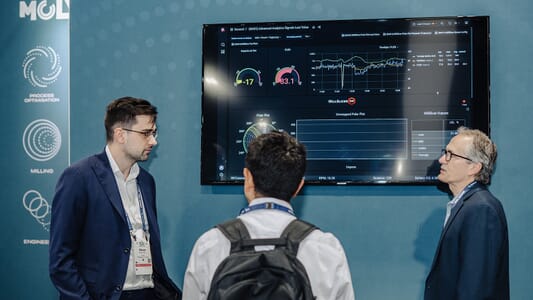
Dr Mu and the Molycop technical team will be on site throughout MetPlant 2026, sharing insights on comminution performance, ore characterisation, and data-driven optimisation. Attendees are encouraged to attend the presentation and visit the Molycop stand to continue the conversation, discuss site-specific challenges, and learn how Molycop’s global innovation and technical services teams are supporting more stable and sustainable mill performance.For more details on Molycop’s presence at the event, visit the MetPlant 2026 page and connect with the team during the conference.